
Named after Robert McNamara, the flawed tendency to rely excessively on what can be quantitatively measured while disregarding qualitative factors that cannot be measured easily, is known as the “McNamara Fallacy”.
McNamara, a former Ford executive, served as Secretary of Defense during the Vietnam War. With a background in planning and financial analysis, McNamara instituted analytical rigor at the Defense Department increasing its reliance on statistical indicators such as body count, kill ratios, and bombing sorties to evaluate progress and measure success in the Vietnam War.
the resilience of the Viet Cong guerrillas, the determination of the North Vietnamese forces and the growing anti-war sentiment in the United States.
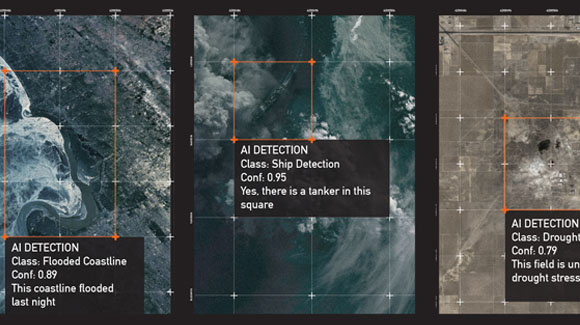
Today, as technology advances and data analysis becomes more prevalent, there is a growing tendency to convert various aspects of our lives into digital formats for quantitative examination. In investment finance, there is an entire industry dedicated to tracking alternative data sources, aiming to capture every type of information, from the number of cars in Walmart parking lots to the heat signatures of oil storage tanks.
The essence of the McNamara Fallacy lies in the recognition that the Vietnam War, like most real-world phenomena, represent complex adaptive systems.
In the field of investment finance, there are two lessons to be drawn from this. First, that the McNamara Fallacy can lead you down a dangerous path of overreliance on the data. The investment world is full of such examples, from Long-Term Capital Management to Subprime CDOs. The blind application of Artificial Intelligence to so many new data sources will only exacerbate the situation. Further complicating the matter, AI itself is a black box.
The second lesson is that as quantifiable and trackable opportunities become increasingly saturated and exploited, the “alpha” will have to come from the sectors, asset classes and investment themes that do not easily lend themselves to quantification -- the investment equivalents of the resilience and determination of the North Vietnamese forces.